The elevator is currently undergoing maintenance until further notice. Access to the terrace is via the stairs only.
Take your time climbing the stairs and be sure to stay hydrated.
Would you like to find out more about the Rekindling of the Flame Ceremony? The committee responsible for this ceremony welcomes students all year round. Explore the symbols of this ceremony and the steps you need to take to attend or take part in the rekindling with your class.
After the First World War (1.4 million soldiers fell for France), the national authorities and associations undertook to perpetuate the memory of this sacrifice. As a result, the idea of paying tribute to the remains of a soldier became widespread.
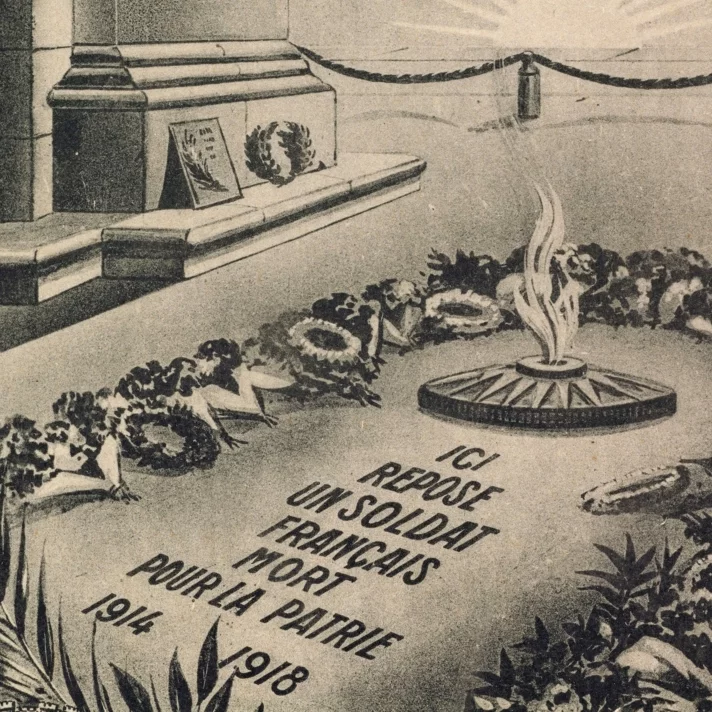
On 10 November 1920, in Verdun, the soldier Auguste Thin, with André Maginot, Minister of Pensions, by his side, designated an unknown soldier from among 8 coffins containing the bodies of unidentified French servicemen. The remains were transferred under the Arc de Triomphe on 11 November 1920, before being buried in their final location on 28 January 1921.
To keep the memory alive, the journalist Gabriel Boissy launched the idea of a symbolic flame. Architect Henri Favier's design was chosen and executed by wrought-iron craftsman Edgar Brandt. The Flame was designed to emerge from the muzzle of a cannon pointing skywards, encased in an inverted shield, the chiselled surface of which was made up of swords forming a star.
On 11 November 1923, André Maginot lit the Flame of Remembrance for the first time. Since then, it has been rekindled every evening during a ceremony organised by the Flame Committee under the Arc de Triomphe, Flame of the Nation.
The rekindling ceremony is organised by the union of associations known as the Comité de "La Flamme sous l'Arc de Triomphe, Flamme de la Nation".
Comprising around 500 associations, the main aim of this association is to rekindle the flame at the tomb of the Unknown Soldier every day at dusk, while keeping alive the memory of all the French and allied servicemen who fell on the field of honour.
Since March 2022, Lieutenant General Christophe de Saint Chamas has chaired the committee.
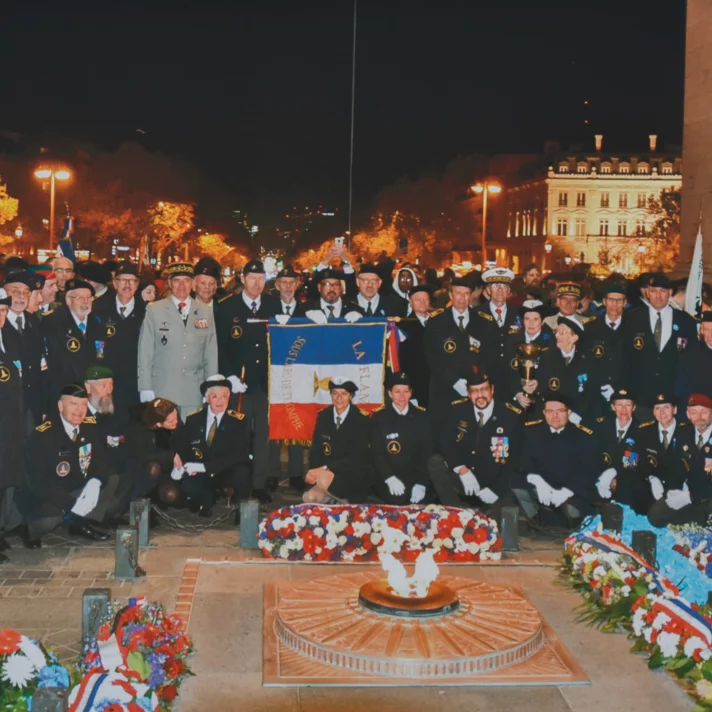
Les commissaires de la Flamme autour de la Tombe du Soldat inconnu, 11 novembre 2022 © Guy Célestine
The rekindling ceremony under the Arc de Triomphe is public. It takes place every evening at 6.30pm.
Interested schools, associations and organisations can apply to take part in a rekindling, wreath-laying or flame-taking ceremony by clicking here.
Please note that this ceremony is not open to individuals.
© Reproduction Benjamin Gavaudo / CMN
Would you like to visit the Arc de Triomphe before attending or taking part in the ceremony, as a self-guided tour, lecture tour or workshop? Bookings can be made with the Cultural and Educational Service, subject to availability. Requests must be received at least one month in advance. Find out how to send in your booking request below.
The Arc de Triomphe offers a range of resources to help you prepare for your visit or discuss the monument with your class, including a file dedicated to the story of the Unknown Soldier.
Access all our educational and thematic packs below!